Showing posts with label video games. Show all posts

Mar 17, 2008

Embattled battlers: strategy games continue to struggle on consoles


If you haven't figured it out yet, I am a nerd. To be honest, I was a nerd long before being a nerd was even a little bit cool. And it was never more apparent than when it came to video games. Sure, I was playing Street Fighter II and Mortal Kombat right there with the cool kids, but I was also feverishly leveling up in Dragon Warrior, and even worse, I was even immersed in whatever strategy game I could get my hands on. Because I was a poverty-stricken nerd, I seldom had a computer that could run anything better than solitaire. So I bought whatever came out on my beloved Super Nintendo. Metal Marines, Liberty or Death, even the port of the original Civilization all graced my little 12" TV. But even then, with my lack of PC support, I knew that these games were lacking. When I got a better computer, I finally understood what I'd been missing. These games were MUCH better on the computer.

Now I'm older, and I still buy and play strategy games, both on my PC and on my consoles. But while the console strategy games are much better, and many have found a niche, such as the games developed by Nippon Ichi Software, they still almost always lag behind their PC counterparts.

But why is this? Well, for starters, there is a question of demand. While most serious gamers can now be expected to own both a PC and at least one console, it is a simple fact that for the most part, gamers look to buy different games for different systems. While RPGs have a market on both, people who buy consoles are usually looking for more action oriented games. While some action games, especially 1st person shooters, thrive on the PC, it is generally accepted as the home for more strategic gaming.

Another factor is the hardware involved. In an action game, fewer buttons can be desirable; when you have only a split second to hit a button, you don't want to have too many options to make mistakes with. But with strategy games, especially real-time strategy, you want many, many shortcuts and presets so that you can input commands quickly and efficiently. Also, when it comes to scrolling across a large battlefield, A controller's analog joystick simply can't compete with a mouse. Now, more and more console games are trying to bridge the gap, supporting keyboard and mouse, but any game hoping for any mainstream appeal can't simply assume that the player has an optional accessory, and as long as they have to design with a controller in mind, console strategy games will be a step behind.

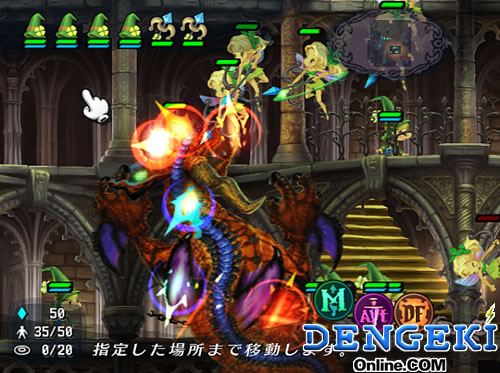
But it's not always a very big step. As I've said, I love many of the Nippon Ichi games. Disgaea is a game that I don't feel suffers much at all on the PS2, and Grim Grimoire is a RTS title that is a lot of fun, although I admit that a mouse would be better. Even more impressive, Command & Conquer 3: Tiberium Wars for the Xbox 360 received ratings that were very close to its PC counterpart. So while the gap remains, what was once a chasm has become a crack.

Video game rumors, myths and legends

You know the stories. Bloody Mary. Hookhand. The prank caller who is already in the house. The naked code in Tomb Raider. Yes, it seems that every aspect of modern life is subject to urban legends, and video games are no exception. But why? Perhaps it's because video games have a long history of hidden content. Codes, Easter eggs, hot coffee, video games have always had hidden content, and gamers have always been willing to listen to rumors and legends about what might be hidden in the code. For nostalgia's sake, as April Fool's Day approaches, let's take a look back at some of our favorites.

As I mentioned already, Tomb Raider games have each been purported to have a nude code, fueling the fantasies of basement dwelling men everywhere. But Lara isn't the only one to have this rumor. Chun Li and Sonya Blade, were both rumored to have similar codes. I also heard that Killer Instinct had a finisher for Orchid where she performed her alternate finisher (the flasher) but that she faced towards the camera, rather than away.


Some myths exploit the emotional ties that we feel for the characters that we play as. Rumors abounded of ways that you could revive Aeris in Final Fantasy VII, and that it was possible to save General Leo in Final Fantasy VI. We the gamers get so attached to these little sprites on the screen that we desperately cling to hope that they might somehow be saved.


Some myths are just outlets for the dreaming overachiever. Jumping over the flagpole in the original Super Mario Bros., getting the triforce in Ocarina of Time, breaking damage caps in almost every rpg ever made, or fighting Kano in Mortal Kombat 2; all of these are persistent rumors of what can be achieved if you can complete some highly unlikely task or set of tasks. But perhaps the most common myths like this pertain to hidden areas or characters. I went to school with a guy who swore that he knew a code to make Reptile playable in the original Mortal Kombat. In an April Fools' joke gone awry, Electronic Gaming Monthly published a code that allowed you to play as Sonic and Tails in Super Smah Bros. Melee. This was total falsehood, but the Internet was flooded by excited gamers. Sonic 2 was reported to have a special area known as the Hidden Palace Zone, and everyone was looking for a way in. This myth actually had some truth to it. There had in fact been a Hidden Palace Zone planned for Sonic 2, but it had been scrapped, but not until after a beta containing part of the zone had been stolen. The most famous secret level of all, however, might be the cow level in Diablo. How this started no one knows, but at some point, the Internet was packed with ways that you could supposedly access the mysterious cow level. In response to this, Blizzard actually made one of the cheat codes in StarCraft the phrase "there is no cow level", but then relented and actually made a secret cow level for Diablo II.

Some myths, however, explore the darker side of human nature. One myth fed into political paranoia, claiming that in the year 2000, Saddam Hussein purchased 4,000 Playstation 2 units to power a military supercomputer. While this now seems even more ridiculous than WMDs, at the time, consumers had been flooded with advertising about how amazing the PS2 hardware was (and it was, my gaming computer actually has some PS2 components) and it seemed powerful enough to allow unprecedented computing power. In a more supernatural sort of myth, there was reported to be a curse on Sonic R for the Saturn. Supposedly, if you played as the Tails Doll, something bad would happen to you at some point. In truth, the Tails Doll is only guilty of being a little creepy, and the only curse seemed to be on Sega itself, as it continued to fall far, far behind other consoles.

In the end, perhaps video game myths are nothing but silly ways for people to try to get the attention of the gullible and naive. But I think that I like the fact that in these days, where almost every game has a strategy guide with a full walkthrough, and every code is only a few keystrokes away, that games can still have a little mystery to them.

Feb 26, 2008

Videogame Movies

It’s become chic to trash video game movies in general, and Uwe Boll in particular. The latter I can certainly understand, if only because you get to read his whiny, childish responses later. But he doesn’t bear the blame for all of the trash out there, even if BloodRayne II: Deliverance was the most unnecessary movie ever made.

For an example of Boll-less garbage, who remembers Super Mario Brothers? The most notable aspect of this movie was that somehow an entire team of moviemakers got together to make a Super Mario Bros. movie, and evidently none of them were at all familiar with Super Mario Bros. Seriously, Bowser was played by Dennis Hopper. And rather than jumping and collecting mushrooms and flowers, they shot at each other with flamethrowers and de-evolution guns.

Another non-Boll movie that is easy to trash is Doom. This movie had everything going for it. A solid star to play the lead. The tie-in to the new Doom III. Plenty of budget for special effects. In fact, it had everything it needed to be a good movie. Well, except for a good movie.

There are some video game movies that are hard to trash, however. DOA and the Tomb Raider movies were, in my opinion, very close to their source material. Some nonsense story that doesn’t make any sense, all circling around some good-looking women.


On the other hand, the Double Dragon movie was truly a waste of film. Fans of the video games were slightly confused, as this movie was actually based on a cartoon, which explains why it was so completely ridiculous in every way. Really, the main mistake with this movie was choosing to make it live action. If they’d just stuck with cartoons, this would have been much better.

In fairness, not all videogame movies are terrible, and not all of them are financial failures. the original Mortal Kombat movie, while not well thought of today, actually did quite well at the time of its release. And the Resident Evil series of movies has been very sucessful, as has Silent Hill.

The problem with making videogame movies is that generally, video games have very thin plots and poor characterization. We as gamers fail to notice this because we fill in those gaps somewhat by taking control of the characters and becoming a part of the story. But when a movie takes us back out of the story and gives us some distance, we can see how little there actually is. Obviously, role-playing games give the best chance to overcome these problems, but Advent Children aside, very few role-playing games are mainstream enough to support a major theatrical release.

So what is the formula for making a sucessful video game movie? Unfortunately, it's not that simple. Obviously, videogame movies usually need a lot of money for special effects. And any movie benefits from good casting. But other than that? Paul W.S. Anderson as largely responsible for the Resident Evil movies, but he also did Super Mario Brothers and the abysmal Street Fighter. Of course, you could just forget about good filmmaking, and just hypnotize children with brand recognition, as demonstrated by the unending series of Pokemon movies.

While I'm aimlessly tossing around ideas about video game movies, here are a few that I'd like to see, provided Uwe Boll can be kept at bay.
- Magna Carta: Tears of Blood. I really thought that the story was engaging, and I’d like to experience it without suffering through the relentlessly bad gameplay.
- One of the Front Mission games. It’s been a long time since there was a mech movie made, and I’m getting close to wanting one bad enough to rent Robot Jox.
- Prince of Persia. Nostalgia alone should sell this game, but if not, throw in the weird evil harem girls from Sands of Time.
- Diablo. I just think that there aren’t enough movies with amazons fighting demons.
- Tenchu. Same with ninjas fighting demons.

As much as I mock them, I still love watching video game movies, and I’m sure that I’ll give Mr. Boll another chance with Dungeon Siege. And then maybe I can read another ridiculous tirade.

Jan 30, 2008

New graphics in Old Games


One of my more controversial articles that I have written is the one called Why Graphics Really Do Not Matter. The reason it brews controversy is that I will then call out a game for not being poor visually. So it's easy to understand why I'm wincing as I type this, because I'm sure I'm about to get called out again. It's all because of the new computer. You see, because of my budgeting, I usually only get a new computer when the old one is minutes away from completely failing to function, and the computer I get is usually minutes away from being obsolete. Therefore, any game that I run is likely to be either very old, or on the minimum settings. This year, however, I got a computer for Christmas. And it is great. And it has breathed new life into some of my older games. The best example of this is when I loaded Unreal Tournament 2004 for the first time. I was able to crank up the graphics all of the way, and I was blown away. In all honesty, the difference was so great that it took me about 5 minutes to recognize the level I was playing on. Now, has that made a bad game good? No, I loved Unreal 2004 even when it didn't look good (and even when I lagged), and I love it now. I'm just trying to say that sometimes if a game seems stale, maybe you just need to give it a fresh look.

Gaming Squared


In 2003, the world of console rpgs was forever changed. Gaming giants Square Soft and Enix merged into what became Square Enix. 5 years later, the world still hangs on their every release. But, some have complained about changes in development philosophy. But what changes have occurred? Well, to begin with, let’s look at the reasons for the merger.

Square Soft was considered the worldwide leader in console rpgs. Obviously, the Final Fantasy series is probably the preeminent brand in console role-playing. The company also had the cult favorite SaGa series, as well as the very successful Mana and Chrono games (Trivia note: the first Mana game was on the Game Boy, and was actually titled Final Fantasy Adventure.) Square had also made a splash with the mainstream-friendly Kingdom Hearts. Less well known outside of Japan, Square also owned the strategy based Front Mission series, as well as Parasite Eve. However, Square was not as profitable as many thought it should be, and games were released at a fairly slow pace.

Enix, however had a different problem. Although the Dragon Quest series (formerly known in America as Dragon Warrior) was extremely popular in Japan, it was not nearly as popular in the US and elsewhere. And the companies other notable properties, Star Ocean and Valkyrie Profile, failed to accomplish mainstream recognition in the way that Square had. That said, Enix was still able to produce games regularly, and make profit off of what sales they had.

In short, Square had the talent, and Enix had the savvy. Enix absorbed Square, and Square Enix was born.

But what has the difference been? Well, many Enix games are much better marketed and developed than they once were. Star Ocean: Till the End of Time and Valkyrie Profile 2: Silmeria were much better marketed than their predecessors, not to mention much more enjoyable. On the other hand, Square’s properties have been released with more regularity, and some business philosophies have changed. For example, in the past, the Final Fantasy games had no direct sequels. Each game was set in a different world, had different characters, engines, and mechanics. Now, Final Fantasy X-2 changed the gameplay of FFX, but reused the characters, storyline, and even many of the maps. Final Fantasy XI and Final Fantasy XII also share a world, which happens to be the same one used for Final Fantasy Tactics, although in a different time period. The biggest departure so far, however, has to be FFVII. In addition to making a movie, Advent Children, there was also a sequel, Final Fantasy VII: Dirge of Cerberus, which was actually a first person shooter, with minor rpg traits.

But what has it meant for gamers? Well, more games, some of which are better, some of which were worse. Because by changing the teams and stepping up the timetables, there has been some decrease in quality with some of Square’s games. And Square Enix is apparently doing very well financially, whereas Square Soft was always in danger of bankruptcy (The disastrously unsuccessful Final Fantasy: the Spirits Within would almost definitely have been a coffin nail if the merger had fallen through).

Ultimately, I feel that the merger was a step forward. Although I do feel like the wheels of progress might have dented a few of the games, I am happy knowing that the games will keep coming for a long time.

Dec 5, 2007

Where Have All the Arcades Gone?


When I was young, I did my best to organize my family's plans around going to places that had arcade games, so that I could (hopefully) beg a quarter (later 2) out of my mother so that I could enjoy a few moments of gaming bliss. And you used to find arcade games in the oddest places. The local video store had a small arcade in the back. Pizza places were always a good bet for arcades. In fairness, some still are. Strangest of all, 7-11s almost always had an arcade or two in them.

Of course, there were also those gaming meccas with large arcades in them. Most kid hangouts, such as miniature golfing, had a fairly large area crammed full of arcade games. And most areas with population had meccas dedicated to nothing but arcade games. I remember new games causing mass hysteria. Mortal Kombat 2 was a great example. Midway made a mint selling what were basically over-hyped beta games, then selling a more complete version to the same place a few months later. And it worked. I remember seeing a banner that read, "We have Mortal Kombat 2 3.0!!!!" The kids at school would be buzzing about it the next day.

Now, most of the places that had only one or two game machines are gone. Many of the places that had many now have a few, poorly maintained gaming cabinets spaced few and far between. And genuine arcades are becoming harder and harder to find. Golden Tee stands by itself, a lone sentry making a last stand in the cold.

But why must it be so? Well, first, let's explore what made arcades so successful in the first place. Perhaps the most important thing was cost. An arcade game back then cost a quarter to play. The NES cost a whopping $200 (yes, as much as a Wii), unless you splurged on the version with R.O.B., in which case you paid $250, and were probably mocked. And, as much as we complain about the cost of a game now, $50 was still a common price for games. So, while you might eventually pay more with the arcade, it would take a long time, and you could play whichever game you wanted, without having to save up big money. Also, the arcade's joystick and button combinations frequently felt better than a home system's controller, the joystick in particular. In fact, many early controllers, such as the NES Advantage, were attempts to make your home console feel more like an arcade. Of course, many games also used a large trackball, which gave a freedom that was impossible to replicate with a control pad. Remember Marble Madness? Yeah, much better with the ball. Another often overlooked detail was that arcades were one of the bast ways to make video games a social event. You could hang out with more friends than could fit in your living room, and everyone could play different games, all at once. Replicating that feat at home would be unbelievably expensive, not to mention terrible feng shui. Finally, the arcade games were just better games. The arcade games had better graphics and gameplay. If a home port existed, it was almost definitely an inferior product in almost every way.

Now, of course, things are different. Many arcades now cost at least a dollar to play, while the home games are still (roughly) the same price, the Playstation 3 aside. And the controllers? Now much, much better at home. Seriously, go look at your console controller. How many control pads and sticks are there? How many different buttons? How hard would it be to play on the damage-resistant flat surface of the arcade? Odds are, very. And now, Online gaming allows us to play and socialize not just with our friends, but with the world. And as technology has gotten better (and smaller), the home games are now at least as good as the arcade, better if you have a cool TV to match. And this is just talking about console games. If you factor in all the power and versatility that PC gaming has to offer, arcades just can't compete, can they?


So what then? Will arcades vanish from our nation, like parachute pants before them? Maybe, maybe not. There are still some successful arcade games out there. Pinball, for example, takes up too much space for the average home. Also, shooting games are still successful at the arcade, as home ports are somehow lacking, not to mention notoriously "twitchy" regarding function. And as motion sensing/capture technology has improved, more games are being made that require the player to actually become physically involved. In the past few years, I have had a lot of fun in arcades sword fighting as a ninja, shooting bad guys while actually having to physically duck and cover, and boxing. Games like this are difficult to set up and play properly at home, making them good candidates for the arcade. But will this be enough? Can these small sub genres keep an industry alive? Maybe the industry should branch out a little bit.

The other day, I was talking about this with fellow arcade aficionado Acidburn, and he had a good idea. Why couldn't first person shooters be fun on an arcade? Now, we had two different ideas on how this could be done. The simplest solution would be to switch the positions of the joystick and the buttons, and play two-dimensional fps games similar to Wolfenstein 3-d or Doom. This could be done quickly and economically, and arcades could be linked for multiplayer arena-style combat. Conversely, they could bring back the trackball, put a fire button next to it, and a joystick on the other side, and play more current-styled shooters. Really, I'm not sure if this, or indeed, anything will save the arcade industry, much less return it to its former glory. Time will tell. But I'm saving up my quarters and hoping.

Nov 11, 2007

Small Platform, Big Business

There's a gaming system that's been out for a while, but no one takes it seriously. It generates millions of dollars in revenue each year, but on the average gaming site, it might not even get a footnote. And chances are good that you have one in your pocket right now. That's right, it's your cell phone.

Cell phones have become a large source of revenue, and bigger game developers have noticed. Companies such as Electronic Arts, Square Enix, and id Software all make games for your mobile phone. And they're not just substandard programmers making substandard titles. Noticeable franchises such as Age of Empires, Final Fantasy, and Simcity have all put games on mobile phones. Still don't think it's big business? Consider this: in 2005, Electronic Arts paid $650 million to acquire Jamdat Mobile.

Cell phone games have their own unique problems. The relatively poor control setup and the extremely small screen mean that the most popular console and PC games are not ideal for a mobile phone. First person shooters and fighting games, perennial favorites, take a backseat to strategy and sports games. But the real king of the cell set? Puzzle games. Yes, the genre reduced to marginal at best on consoles has risen to the top on mobiles. In fact, the $650M transaction that I mentioned? It was largely based on the fact that Jamdat had long-term rights to Tetris. The fact is that cell phones lack the memory space to put in state of the art graphics and the complicated systems that top shelf games boast. Which make cell phones an ideal starting point for new programmers and designers. And cell phones have breathed new life into older franchises. In 2005, id Software released a Doom RPG for mobiles.

No one is certain where the market for cell phone games is headed. But it is an industry that is definitely upwardly mobile.